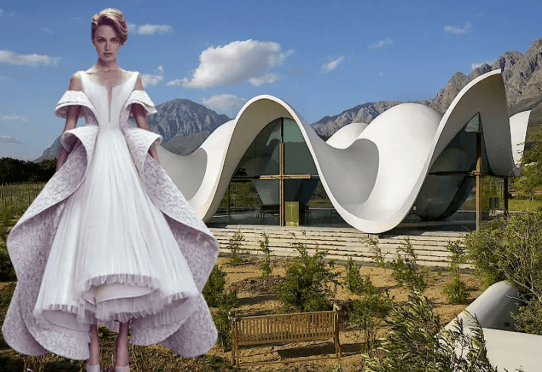
Architecture informs fashion through a measured vocabulary of proportion, rhythm, and mass. Garments translate facades into silhouettes, seams into grids, and weights into drape. Materials echo building skin; textures mark cadence, color maps urban nuance. The discipline is clear, yet the result invites reinterpretation—modular forms that adapt to movement while retaining structural logic. A quiet tension persists: what happens when a city’s geometry becomes a wearable code that still leaves space for surprise.
How Architecture Inspires Fashion Design
Architecture provides a structural vocabulary that translates directly into fashion design. The approach segments form into modular ideas, guiding silhouette, detailing, and texture with disciplined clarity. Designers interpret cultural symbolism as visual shorthand, translating landmarks and rituals into wearable cues. Urban scale informs proportion, translation into fabric weight, seam lines, and drape, yielding restrained yet expressive garment language.
Translating Proportion, Rhythm, and Mass Into Garment Form
Proportion, rhythm, and mass serve as the core grammar for garment form, translating architectural measurements into wearable scale. The discussion outlines a clear proportion study framework: identifying relative module sizes, spacing, and silhouette logic. It emphasizes disciplined mass translation into garment blocks, ensuring balance and cadence. The result remains precise, unornamented, and liberating for designers seeking structural clarity within expressive freedom.
Materials, Texture, and Color Drawn From the Built Environment
The built environment supplies a palette of materials, textures, and colors that can be translated into garment language with disciplined precision. Materials texture informs surface behavior; color rhythm guides layering and cadence. Constructed echoes become deliberate seams and tones, translating architectural logic into wearable form.
The collection embodies disciplined freedom: grid-inspired structure, tactile variation, and a restrained palette that communicates intention without excess.
Case Studies: Designers Turning Buildings Into Wearable Architecture
Case studies reveal how designers translate standing structures into wearable form by isolating formal logic from architectural precedents. They examine façades as frameworks, converting volumes into articulated garments with sculptural silhouettes and modular grids. Designers critique proportional constraints, then reassemble surfaces into movement-friendly silhouettes, balancing rigidity and fluidity. The result is disciplined experimentation that remains legible, bold, and adaptable across contexts.
See also: The Future of Precision Medicine
Frequently Asked Questions
How Do Cultural Symbols Influence Architectural-Inspired Fashion Beyond Form?
Architectural motifs influence not only form but meaning; cultural symbolism guides narrative, elevating materiality psychology and wearer perception. Designers render symbolic cues with disciplined geometry, shaping audience freedom while preserving structured, impactful statements that resonate beyond aesthetics.
Can Sustainability Reshape Architecture-Derived Garment Production Methods?
Sustainable sourcing and circular design can reshape architecture-derived garment production methods. The approach is structured, geometric, disciplined, yet it invites freedom; designers reframe supply chains, reuse materials, reduce waste, and align performance with aesthetic integrity and environmental accountability.
What Role Does Wearer Mobility Play in Architectural-Inspired Silhouettes?
Architectural-inspired silhouettes negotiate mobility constraints through careful geometry; wearers require ergonomic drape to maintain function. The design ethos prioritizes freedom within structure, translating movement into disciplined lines where mobility and form intersect without compromising aesthetic intention.
How Are Architectural Failures Translated Into Fashion Cautionary Tales?
Architectural failures become cautionary tales that inform fashion: designers translate brittle lines into wearable mobility, transforming collapse into restraint and structure. The result is disciplined silhouettes that balance aspiration with safety, offering freedom within geometrically controlled, architecturally informed garments.
Do Architects Collaborate on Garment Storytelling and Campaigns?
Architects collaborate, indeed, facilitating garment storytelling through disciplined dialogue and design-driven campaigns; architect collaboration informs narratives, guiding structure and symbolism, while couture communicates concepts. The approach remains structured, geometric, and free, blending precision with expressive, boundary-pushing fashion storytelling.
Conclusion
In urban light, fabric becomes plan; in shadow, silhouette maps the blueprint. The collection marches with disciplined bravura, like steel girders welded into draped fabric. Proportion aligns with grid, mass parks itself as negative space, both precise and fluid. Texture recalls façade textures—matte, gloss, tactile—while color mirrors city palettes at dawn and dusk. Juxtaposition holds: rigid geometry softens into movement, and monumental restraint yields liberated form, proving architecture can wear time in structured, luminous steps.